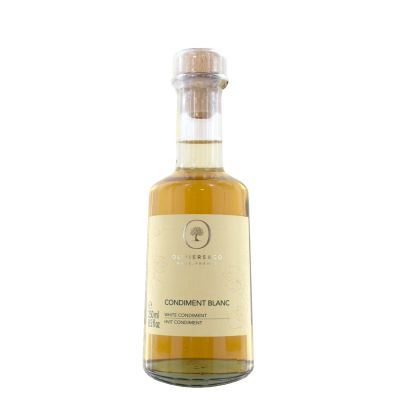





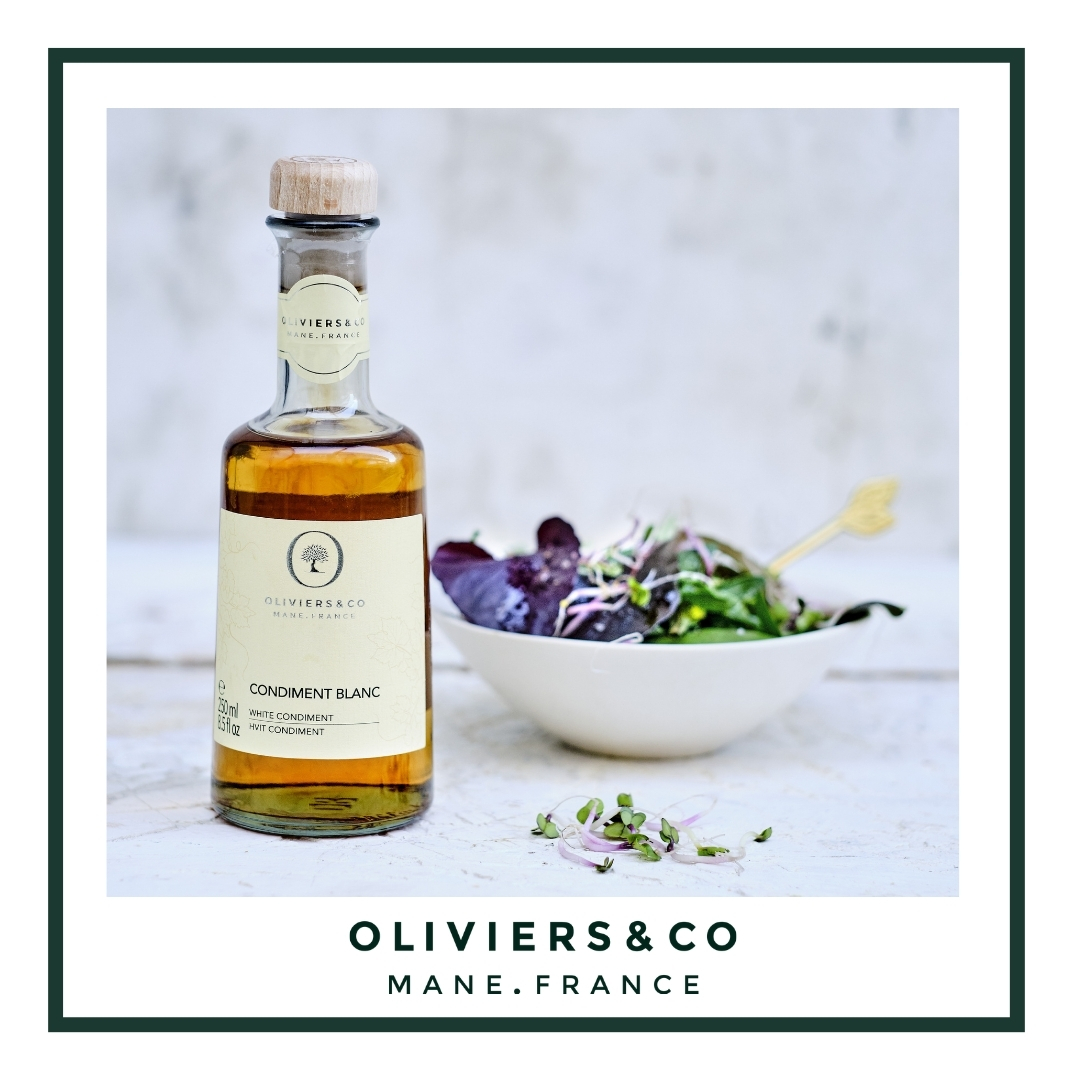
Is white condiment a balsamic vinegar ? This question comes up often, and the answer is one word : no. Yet these two products share the same base ingredients. This is precisely where all the subtlety lies, and what makes our white condiment so unique.
The same ingredients, two different identities
Balsamic vinegar of Modena and white condiment are both made from grape must and wine vinegar. But the nature of the grapes, their proportions and how they are processed give rise to products with opposite flavour profiles.
Balsamic vinegar of Modena is subject to strict IGP specifications: ageing in wooden barrels, selected red and white grapes, and production localised in the provinces of Modena and Reggio Emilia. The result is a dense, rounded product, both powerful and balanced, a complexity that builds over years.
Oliviers&Co's white condiment Oliviers&Co follows an entirely different logic. It is made solely from white grapes, concentrated grape must and high-quality white wine vinegar, with no added flavourings. Its high must concentration gives it a natural honeyed and sweet note, whereas classic balsamic draws its sweetness from a long oxidative ageing process.
This difference in production also explains why white condiment cannot bear the name balsamic. European regulations are clear : the term balsamic is reserved for products containing balsamic vinegar of Modena IGP as an ingredient, aged for a minimum of 3 years.
The unique profile of our white condiment
With its light amber colour, our white condiment offers a balance that few condiments achieve: low acidity, a natural fruity sweetness, and a delicately floral touch, all without any additives or added flavourings. On the palate, it is light where balsamic is deep. Its low acidity makes it a mild alternative to classic white wine vinegar, with infinitely more character.
How to use it?
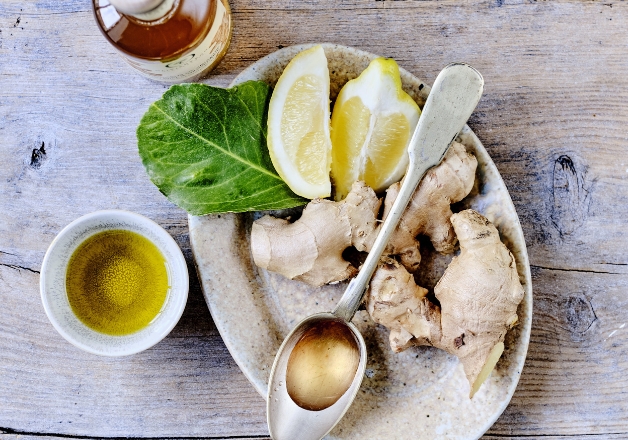
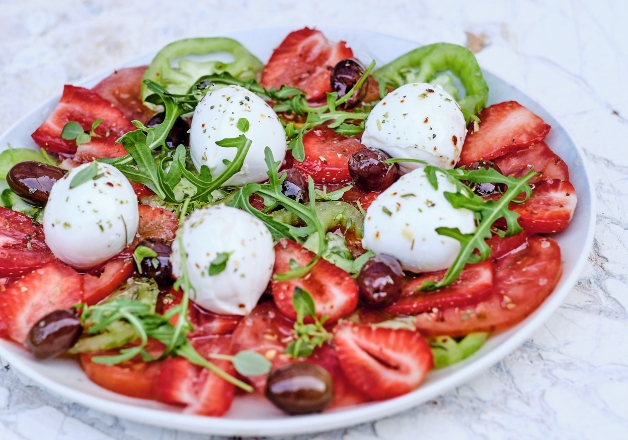
Its lightness and visual clarity make it the condiment of choice for any dish where you want to avoid discolouring the ingredients. It is naturally used in salad dressings, where it adds roundness and balance without overpowering the other flavours. On fish and seafood carpaccio, its floral sweetness highlights the delicacy of the marine flavours without overwhelming them. A few drops at the end of cooking on scallops or grilled chicken help deglaze the pan and add a fresh, slightly sweet touch. Finally, it can replace classic vinegar in a homemade vinaigrette for a milder, more complex result on the palate.