Behind every bottle of balsamic vinegar lie years, sometimes decades, of patience, know-how and transformation.
Why age balsamic vinegar?
Ageing is a chemical, sensory and cultural necessity. Over the years, the cooked grape must becomes more concentrated and dense, developing an aromatic complexity that is impossible to reproduce artificially. The natural sugars gradually transform, the acidity balances out, and the interaction with the wood of the barrels enriches the flavour profile.
It is also a tradition passed down through generations: in the attics of Modena, some barrel sets have been inherited from generation to generation true family treasures to which a little of one's own history is added each year.
It all begins in the vineyard
It all starts with the harvest of seven carefully selected grape varieties, including Lambrusco, Trebbiano, Sauvignon, Ancellotta, Occhio di Gatta, Berzemino and Sgavetta emblematic grape varieties of the Modena region.
After pressing, the resulting juice is slowly cooked over low heat for several hours in large open vats. This slow cooking reduces the must by about half, concentrating its natural sugars and giving it its characteristic amber colour. This cooked must (or mosto cotto) is the raw material for the future balsamic vinegar.
The barrel set
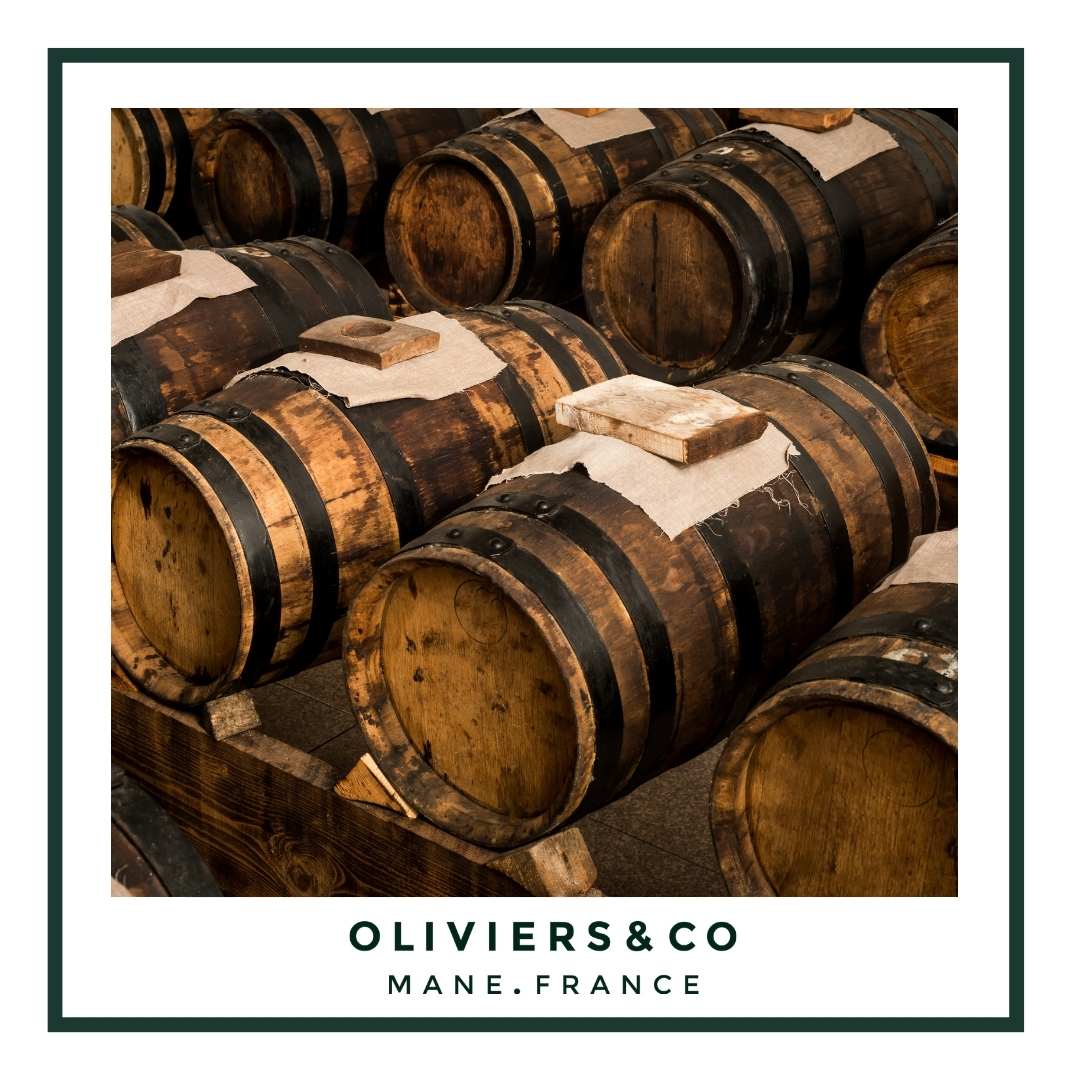
Once cooked and slightly cooled, the must is poured into the first barrel of a set a group of barrels of decreasing size, generally five to seven, lined up in the attic.
The wood used to make the barrels must come from different species, to diversify the aromatic qualities of the vinegar. It is this variation in wood from one barrel to another that gives the final product its aromatic complexity, without any added flavouring substances.
The annual transfer
This is where the true singularity of the balsamic process lies. Unlike a wine or a cognac, which ages in a single container, balsamic vinegar travels from one barrel to another each year, in a precise direction: from the largest to the smallest.
Here is how it works, in practice:
1- The mother barrel receives the new cooked must each year. This is the entry point of the set.
2- Once a year, usually in winter, when low temperatures stabilise the product, the producer carries out the transfers in a precise order: a portion of the contents of the last barrel (the smallest) is drawn off for bottling, then each barrel is topped up with the barrel that precedes it in the set.
3- The first barrel is then refilled with the cooked must from the new harvest.
This cascading movement, repeated every year, creates a natural blend of different vintages. The product drawn from the last barrel is therefore both very old and continually renewed a characteristic unique to traditional balsamic vinegar.
The attic, a key player
The place of ageing is not insignificant. Barrel sets are traditionally kept in attics, under the rooftops of houses in Modena.
Why attics ? Because the temperature variations between seasons are essential to the process:
In summer, the intense heat encourages natural evaporation and concentration of the product. This is known as the calo, the annual reduction that intensifies the aromas and gradually thickens the vinegar.
In winter, the cold slows down fermentation and allows the product to stabilise before the transfers take place.
A story that continues
What makes balsamic vinegar so fascinating is that it is never quite the same from one year to the next. Every vintage, every climate variation, every type of wood leaves its mark. Some barrel sets are more than 100 years old, and the balsamic vinegar they produce today still contains, somewhere, a tiny trace of cooked must from another century.
It is this living continuity, this liquid heritage passed down from generation to generation, that makes every drop of traditional balsamic vinegar much more than a seasoning: it is a work of patience and passion.
Discover the history and production of Modena balsamic vinegar.
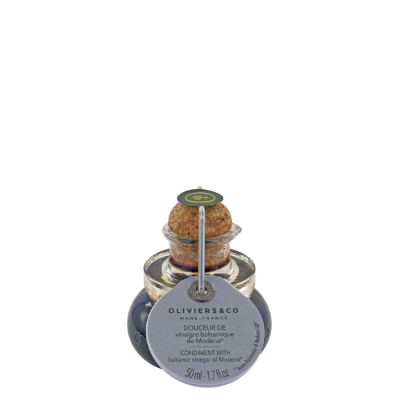
Our balsamic vinegars
-
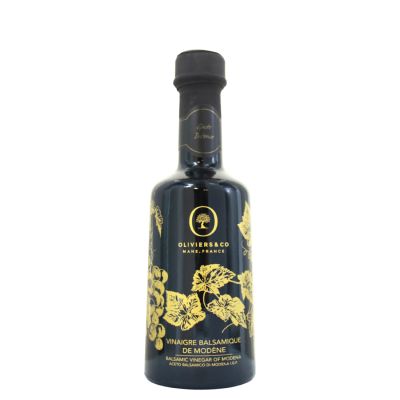
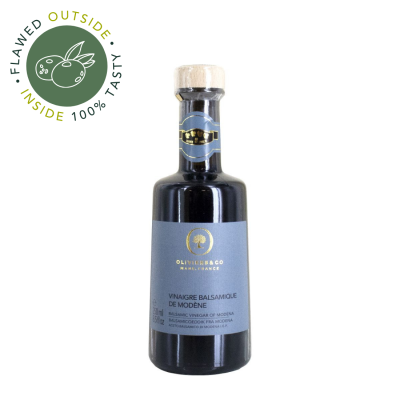 Premium Balsamic Vinegar of Modena - ImperfectSpecial Price $28.00 Regular Price $40.00
 -
-

-
-